What does a solar PV system cost in 2026, and what actually drives payback?
Two questions come up before almost any other when a homeowner starts looking into solar panels: what will it cost, and how long until it pays for itself? Both answers vary far more than headline figures suggest, because they depend on the size of system fitted, the property it's going on, and how the household actually uses electricity afterwards.
On price, 2026 data drawn from MCS-registered installations commonly puts the average cost of a domestic system at somewhere around £1,500-£1,700 per kWp installed, though this varies by installer, panel brand, roof complexity and region. For a typical 3-bed home fitting a modest 4kW system, that commonly works out at an all-in installed cost of roughly £6,500-£8,500. Adding a battery, or opting for a larger system on a bigger roof, moves the total substantially: as an illustration of the range seen across UK installers in 2026, packages have been quoted from around £8,500 for a small 2.7kWp system paired with a 10kWh battery, up to around £9,995 for a commonly cited "most popular" configuration of 5-6kWp with a 16.1kWh battery, and £14,000 or more for a larger 10kWp system with 16-32kWh of storage on a bigger detached home. These are illustrative packages rather than fixed prices, and the only way to know what your own roof and usage will cost is to get quotes against your specific property.
One piece of good news that applies fairly consistently across the market is VAT. Installing solar panels and battery storage in qualifying residential accommodation in Great Britain is currently zero-rated for VAT under HMRC's temporary relief, set out in VAT Notice 708/6. This relief is in place until 31 March 2027, after which it's due to revert to the reduced 5% rate from 1 April 2027. A VAT-registered installer applies the zero rate automatically on the invoice — there's no separate claim or paperwork for the homeowner to submit. It's worth noting this relief covers new qualifying installation work, not standalone repairs or like-for-like parts on an existing system, so a straightforward inverter swap on an older system, for example, would not benefit from it.
Payback period is where the most caution is needed, because there is no single correct answer that applies to every home. Industry sources commonly cite rough ranges of somewhere around 6-11 years for a standalone panel system and roughly 9-13 years once a battery is added, but these figures depend heavily on how much of the generated electricity a household actually uses itself, the export tariff chosen, the property's orientation and shading, and the size of system relative to typical demand. Two neighbouring houses with identical systems can see meaningfully different payback purely because one household runs the washing machine and dishwasher during daylight hours and the other doesn't.
Self-consumption, using generated electricity directly rather than exporting it, is generally the single biggest lever on payback, because electricity used directly is valued at the full retail import rate avoided, while electricity exported is paid at whatever Smart Export Guarantee rate has been agreed, which is typically lower. Shifting flexible loads such as washing machines, dishwashers, EV charging or immersion heaters into daylight hours, where practical, tends to improve payback more reliably than any single piece of kit. Pairing panels with a battery and, where relevant, a time-of-use import tariff can push self-consumption higher still by storing daytime surplus for use in the evening, though this adds to the upfront cost, which is why it doesn't automatically shorten payback for every household.
Roof orientation and shading also matter more than many homeowners expect. A south-facing, unshaded roof will generate meaningfully more over a year than an east- or west-facing equivalent, and even partial shading from a chimney, tree or neighbouring building at certain times of day can disproportionately reduce output from whichever panels are affected. A good installer should model expected generation for your specific roof rather than quoting a generic "average" figure, and it's worth asking to see that modelling before committing.
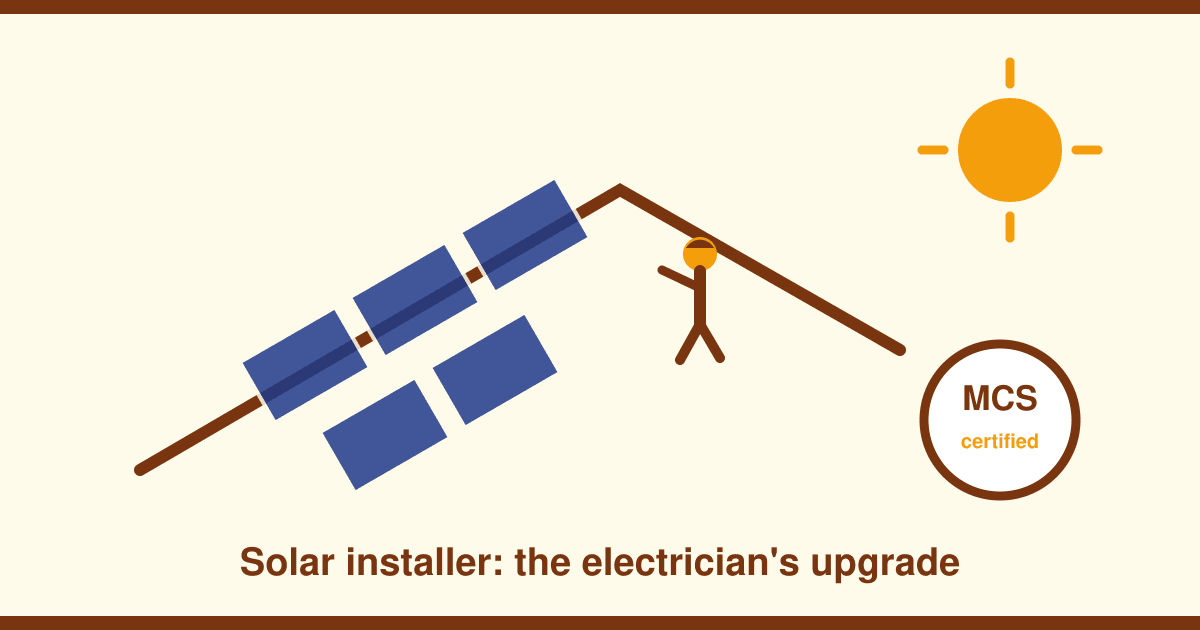
Finally, because both price and expected output vary so much between installers, getting two or three like-for-like quotes remains one of the most reliable ways to establish whether a specific offer is competitive for your roof, rather than relying on national averages. Ask exactly what's included — scaffolding, the DNO/grid connection paperwork, MCS certification documentation, and any monitoring app or smart meter setup — since, as with any building trade, two quotes that look similar on price can cover quite different scope.
Frequently asked questions
A modest 4kW system for a 3-bed home commonly costs around £6,500-£8,500 installed, based on a typical per-kWp rate of roughly £1,500-£1,700, though this varies by installer, panel brand, roof complexity and region — always get quotes against your specific property.
No — installing solar panels and battery storage in qualifying residential accommodation is currently zero-rated for VAT under HMRC's temporary relief (VAT Notice 708/6), in place until 31 March 2027, after which it's due to revert to 5%. The relief is applied automatically by a VAT-registered installer.
There is no fixed figure — commonly cited ranges are roughly 6-11 years for a standalone system and 9-13 years with a battery, but this depends heavily on how much generated electricity you use directly, your export tariff, roof orientation and shading, and system size relative to your demand.
Self-consumption is usually the single biggest lever, since electricity used directly avoids the full retail import price while exported electricity is paid at a typically lower Smart Export Guarantee rate — shifting flexible loads like washing or EV charging into daylight hours tends to help more reliably than any single upgrade.